Your website is where leads are won or lost. A homeowner searches for a plumber. A patient looks for a nearby clinic. A buyer compares three suppliers before requesting a quote. In each case, the quality of your website decides whether you get the enquiry, or your competitors do…
If your site is slow, hard to use on mobile, or unclear, people don’t bother hanging about to complain. They leave.
In this case, the problem isn’t down to poor marketing. It’s the website failing to meet the standards that modern consumers have come to expect.
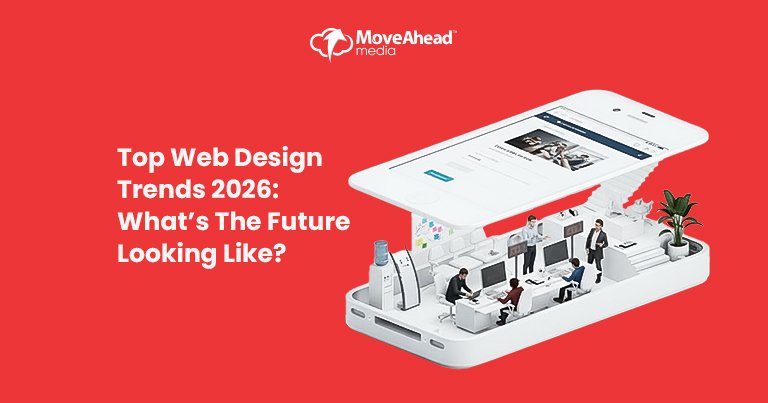
That’s why understanding web design trends 2026 isn’t about chasing fashion, but making sure your site will still be working as a lead-generation tool in two years’ time, rather than simply looking ‘good enough’.
Why Web Design Is Changing Faster Than Ever
Website expectations are rising quickly and they’re being set by the best experiences people have elsewhere online. When your site falls below those standards, your results suffer.
Here are the main forces driving change, and why they matter commercially:
- AI-Assisted Design → Enquiry Quality
Artificial intelligence now influences layouts, content, and user journeys. Used well, it improves relevance. Used poorly, it creates generic, confusing sites. - Shrinking Attention Spans → Lost Bookings
When a page takes four seconds to load, most visitors are already gone. Slow sites haemorrhage genuine enquiries. - Mobile-First Is Now Mobile-Only → Missed Revenue
For many trades, health, and service businesses, most traffic is mobile. If your site feels awkward on a phone, it’s costing you. - Accessibility Standards → Risk and Reputation
Poor accessibility means some customers simply cannot use your site. In certain sectors, it also affects contracts and compliance. - Faster Development Cycles → Stronger Competition
Your competitors can now launch better sites, faster. Don’t get left behind.
The Biggest Web Design Trends to Expect in 2026
The following trends reflect how customers now expect to interact with businesses online: quickly, clearly, and on their terms. They are tools, not decorations. When used properly, they support growth; when used carelessly, they waste budget…
AI-Driven Design and Personalised Interfaces
This isn’t about flashy chatbots. It’s showing the right offer to the right visitor at the right moment. In practical terms, AI web design is already helping businesses to:
- Present different content to new and returning visitors.
- Highlight relevant services based on browsing behaviour.
- Adjust layouts automatically for mobile users.
- Reduce bounce rates on key pages.
For example:
An online retailer notices repeat visitors often abandon product pages. AI tools reorganise those pages to surface reviews and delivery details earlier. Conversions rise without changing the products. That’s where AI begins to affect real sales.
In 2026, expect more sites to use:
- Adaptive UX
Layouts that respond to device, location, and behaviour. - Smarter Personalisation
Service pages that prioritise what visitors care about most. - Predictive Navigation
Key information appearing before users search for it.
Poorly implemented AI creates bland, template experiences. Used properly however, and it significantly improves enquiry rates and customer satisfaction.
Ultra-Minimalist and Clutter-Free Experiences
Minimalism is about helping visitors make decisions without friction. When a page contains too many options, images, and messages, people hesitate. Then they leave and end up with one of your competitors.
Modern web aesthetics in 2026 will be more focused on:
- Clear visual hierarchy
- Focused service pages
- Fewer competing messages
In practice, this means guiding visitors towards booking, calling, or enquiring, absent unnecessary distraction.
For service businesses, this often leads to:
- Higher form completion
- More phone enquiries
- Lower abandonment rates
In short, less clutter usually leads to more leads (when paired with other best practices, of course).
Motion Micro-Interactions and Subtle Animations
Motion is becoming the new standard, but exercising restraint is important. Micro-interactions are small animations that respond to user actions. For example, a button changing state after being clicked or a form confirming submission. When used well, they:
- Confirm actions instantly
- Guide attention to key elements
- Reduce user uncertainty
Used poorly, however, and they slow pages and irritate visitors.
In practice, this requires careful UX planning, not simply slapping on a few special effects. Businesses working with structured UX/UI Solutions tend to see better results because animation is tested, measured, and refined.
Performance always comes first.
Bold Typography and Enhanced Readability
Typography is becoming more prominent, especially on mobile. Large, clear fonts now serve a practical purpose: helping visitors understand your offer within seconds.
This matters for:
- Older users
- Mobile visitors
- High-intent service pages
Modern typography supports:
- Faster scanning
- Stronger credibility
- Improved accessibility
The goal isn’t to simply “make a statement”. It’s to communicate your professionalism and authority as quickly and as clearly as possible.
Dark Mode Defaults and Ambient UI Themes
Dark mode is now expected by many users. It reduces eye strain, conserves battery life, and feels familiar across devices. Ambient theming takes this further by matching a user’s system preferences automatically.
For businesses, this supports:
- Brand consistency
- User comfort
- Perceived professionalism
It’s a small detail that reinforces trust.
3D Visuals, AR-Lite Elements and Enhanced Depth
3D and AR features are becoming more accessible, but they are not for every business. They are most useful when they support understanding. For example:
- Property developments
- Medical equipment suppliers
- Complex product catalogues
In these cases, lightweight 3D improves buyer confidence. In other contexts, it merely adds cost without return.
Accessibility-First Design as Standard
If part of your audience cannot use your site, then you’re losing business. Accessibility is now a core element of website design best practices, and not just some optional extra for those with the extra budget.
Essential requirements include:
- WCAG compliance
- High colour contrast
- Keyboard navigation
- Screen reader support
For many businesses, accessibility also affects reputation, partnerships, and procurement processes. In other words, inclusive design can help protect your revenue and your credibility.
Sustainability-Focused Web Design
Sustainable design starts with performance. Heavy pages cost more to host, load slowly, and rank poorly.
The most efficient sites use:
- Compressed images
- Clean code
- Optimised hosting
- Reduced data transfer
This leads to lower costs, faster pages, and better rankings (with environmental benefits as a by-product).
How These Trends Shape Business Websites in 2026
When applied well, these digital design trends produce impressive, measurable outcomes:
- Higher Engagement
Visitors stay longer because pages load quickly and make sense. - Stronger Brand Trust
Clear, accessible sites build confidence before the first enquiry. - Better Mobile Performance
Mobile users’ complete forms instead of abandoning them. - Faster Conversions
Fewer distractions mean more bookings, calls, and purchases.
Each of these improvements compounds over time.
Common Mistakes Businesses Make When Updating Their Website
Redesigns often fail for a number of predictable reasons:
- Overusing Animations
Excess motion slows pages and frustrates users. - Neglecting Accessibility
This excludes customers and increases legal risk. - Chasing Trends Over Strategy
Features that don’t serve customers usually cost leads. - Ignoring Performance
Heavy media and poor optimisation hurt rankings and ads. - Forgetting UX Fundamentals
Confusing layouts hide CTAs. Tools like Heat Map Analysis can be used to reveal where users actually struggle.
Ongoing monitoring and comprehensive website maintenance services can help to prevent these issues long-term.
When to Bring in a Professional Web Design Team
Modern websites involve strategy, testing, compliance, and ongoing optimisation. Managing this internally often leads to:
- Delayed launches
- Inconsistent quality
- Missed conversion opportunities
Working with experienced website design and branding experts on the other hand, can significantly reduce these risks. A professional team plans structure, tests performance, measures behaviour, and iterates based on the data collected.
Is your website actually generating leads or just sitting there looking pretty? If you’re not seeing consistent enquiries, bookings, or sales, your site isn’t doing its job.
Contact us today and let’s identify what’s blocking your growth and fix it.
When to Bring in a Professional Web Design Team
Modern websites involve strategy, testing, compliance, and ongoing optimisation. Managing this internally often leads to:
- Delayed launches
- Inconsistent quality
- Missed conversion opportunities
Working with experienced website design and branding experts on the other hand, can significantly reduce these risks. A professional team plans structure, tests performance, measures behaviour, and iterates based on the data collected.
Is your website actually generating leads or just sitting there looking pretty? If you’re not seeing consistent enquiries, bookings, or sales, your site isn’t doing its job.
Contact us today and let’s identify what’s blocking your growth and fix it.

Frequently Asked Questions (FAQs)
What are the top web design trends for 2026?
How does AI influence future web design?
Do these web design trends improve conversions?
Yes. Better speed, clarity, and usability directly support higher engagement and trust. Many of these principles are also used by Conversion Rate Optimisation experts.
Should I redesign my website for 2026 standards?
If your site is more than three to four years old, performs poorly on mobile, or generates weak leads, planning a redesign is sensible.