The digital marketing landscape is made up of a hundred little things.
Storytelling, modern design, keyword research… but ultimately, the goal is to attract the right audience. Even better, retaining them in the long-term.
We’re taught that Google Ads is for searching. It’s about finding new people to click ‘buy’ on our products and then swiftly moving on. But if you play your cards right, it can be a powerful tool for keeping people around.
Sounds too good to be true? Stay with us and we’ll talk you through how to create a Google Ads strategy that actually builds a relationship with your audience.
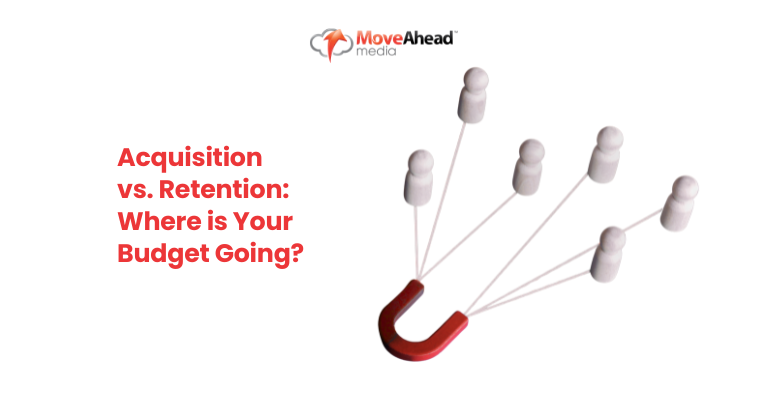
Acquisition vs. Retention: Where is Your Budget Going?
Before we dive in, let’s get the two big marketing terms out of the way. If we’re going to balance the budget, it’s crucial to understand what we’re balancing.
- Acquisition
This is the act of winning someone over who has never bought from you before. Essentially, you’re trying to convert a stranger into a first-time customer. - Retention
This is the act of keeping that conversation going. It’s about making sure your customers stay satisfied and continue to buy from you time after time.
Most businesses focus on acquisition. And honestly, we get it. The feeling of converting a new customer is pure euphoria. It spells out success in every way. However, there comes a point where chasing new customers becomes counterproductive and just outright expensive.
As our Senior PPC Campaign Manager, Mikey, explains, choosing between the two comes down to a specific framework:
“When deciding between acquisition and retention, I look at three things: Market Maturity, Customer Value, and Budget Efficiency. We have to ask: How long has this brand been running ads? What is the actual long-term value of these customers compared to the management costs? And most importantly, what is the market value of a lead? If leads are expensive for your industry, retention is how you protect your margins.”
If you’ve already built a significant customer base, that in itself becomes your most valuable asset. Here, you have an opportunity for repeated purchases from customers who already know you. You don’t have to create that captivating first impression anymore. Instead of trying to win them over from scratch, you shift your focus to relevance.
So, what does a Google Ads retention strategy look like? Let’s get straight into it.
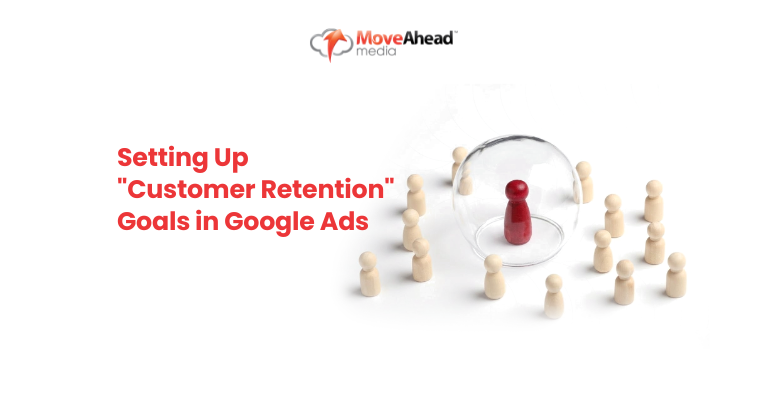
Setting Up “Customer Retention” Goals in Google Ads
It all starts with Customer Lifecycle Goals. A regular Google Ads strategy treats every click the same. A conversion is a conversion, right? But Lifecycle Goals allow you to prioritise your spending based on where someone is in their journey with you.
If you want to put your efforts into retaining your customers, all you have to do is just let Google know. Communication is key, even when you’re talking to an algorithm. Who knew?
Here’s how you can set it up:
- Step 1: Define Your Existing Audience
Before you can retain them, Google has to recognise them. You can do this by uploading your ‘First-Party Data’ (or basically your email list or CRM data) into the Audience Manager. Now the algorithm has a verified list of who has already bought from you, removing all the guesswork. - Step 2: Set Your Lifecycle Goal
When you’re setting up your campaign, you’ll see an option to optimise for specific types of customers. This is where you choose ‘bid higher for existing customers.’ Google has really made it that easy. By choosing this, you’re signalling that you’re willing to put more weight behind the people who already know and trust you. - Step 3: Value Your Retention
It all comes together here. Google allows you to assign a specific ‘Conversion Value’ to different actions. Instead of just tracking the immediate sale, you can tell Google that a returning customer is worth an extra $20 in long-term value. This trains AI to hunt for those repeat purchases because it sees them as ‘high value’ wins.
But how do you know if the algorithm is actually learning? When asked what signals indicate a retention strategy is actually paying off, Mikey said:
“If I had to pick one ‘north star’ signal, it would probably be a rising ROAS. If you get a steady rising ROAS, it just means you are most likely triggering repeat purchases at a fraction of the cost compared to new customers or new leads.”
Essentially, when your ROAS climbs while your spend stays steady, you’ve hit the retention sweet spot.

Utilising Customer Match Lists for Thai Audiences
It’s one thing to know the general overview of how a Google Ads retention strategy works. But with all things marketing, context is everything. The best strategy simply will not work if it’s not tailored to the market, audience, or industry.
Let’s use data as an example. In Western markets, the email address is the primary way to identify a customer. But, in Thailand, your ‘First-Party Data’ is often a mix of phone numbers from Line Official Accounts, Facebook Messenger leads, and mobile-first checkout data.
Why is this relevant? Well, if you relied only on email addresses in Thailand, your match rate is likely to be famously low (your match rate is the percentage of your list that Google actually recognises and can find online).
In Thailand, an email address is often a formality. Their phone number, however, is their digital identity. It’s tied to their Line, their banking, and their social accounts. By uploading phone numbers instead of just emails, you’re in sync with the local algorithm. Your list has meaning. Potential. Weight.
Creative Strategies: Re-engaging Past Purchasers
You’re in the right crowd now, the mic is yours. Have you thought about what you’re going to say? If your first inclination is, “The same thing I’ve been doing,” we’re glad you’re here.
This is the key distinction. A Google Ads retention strategy speaks to people who already know who you are. Putting out the same messages is the equivalent of Harry Styles showing up to a sold-out stadium and spending the first 40 minutes explaining that he used to be in a boy band (we already know!).
You need to move your narrative forward. Past all the glittery introductions. Provide your audience with a fresh perspective. If they bought a premium skin serum last month, don’t show them the serum again. Show them a complementary product that enhances their routine.
Put yourselves in their shoes: what would you like to see?

The 1% Rule: When to Switch Back to Acquisition
Like we said, converting a new customer feels rhapsodic. Retention might not have that same effect, but that doesn’t mean you should ignore it. On the other hand, you can’t survive on retention alone if your audience is too small.
The question is: when do you prioritise one over the other?
Our general rule of thumb is not to go all in on a retention-only strategy until you have the numbers to back it up. Unless at least 1% of your total addressable market is already on your Customer Match list, a full pivot away from acquisition isn’t the right move. At least not yet.
You still need to ‘fill the funnel’ to build a formidable audience. Once you’ve got that 1% though, you’re golden.
Conclusion: Balancing Growth and Loyalty
We’re ready to wrap it all up. As a GDN Marketing Agency in Bangkok, we’ve seen that Google Ads in Thailand can be one of the most lucrative strategies in your arsenal, but the real power lies in retention.
Marketing is a constant dialogue; you’re consistently trying to create a connection with your audience. But once you’ve secured that connection, it’s vital that you put forward the effort to sustain it.
Ready to shift your marketing strategy? Reach out to our team to discuss more about our Google Ads or PPC services in Bangkok!

Frequently Asked Questions (FAQs)
Can I use Google Ads only for existing customers?
Absolutely. By leveraging Customer Match and refined audience targeting, you can exclusively tailor ads to your existing database.
What is a Customer Match list?
A Customer Match list consists of your own customer data (emails or phone numbers) that you upload to Google. This allows you to target your ads specifically to people who have already interacted with your brand across Search, YouTube, and Gmail.
How should I split my budget between acquisition and retention?
Use the 1% rule as a guide. Until at least 1% of your potential market is on your list, keep your budget focused on acquisition.
How do I measure the ROI of retention campaigns?
Look at Repeat Purchase Rate and Customer Lifetime Value (CLV). Retention is often more profitable in the long run because it’s cheaper to re-engage someone who knows you than it is to convert a stranger.