In the fast-paced world of search engine optimisation, building a strong backlink profile is essential for success. Getting other reputable websites to link to your content acts as a vote of confidence. This shows Google that your site is a reliable and authoritative source. However, not all links are created equal.
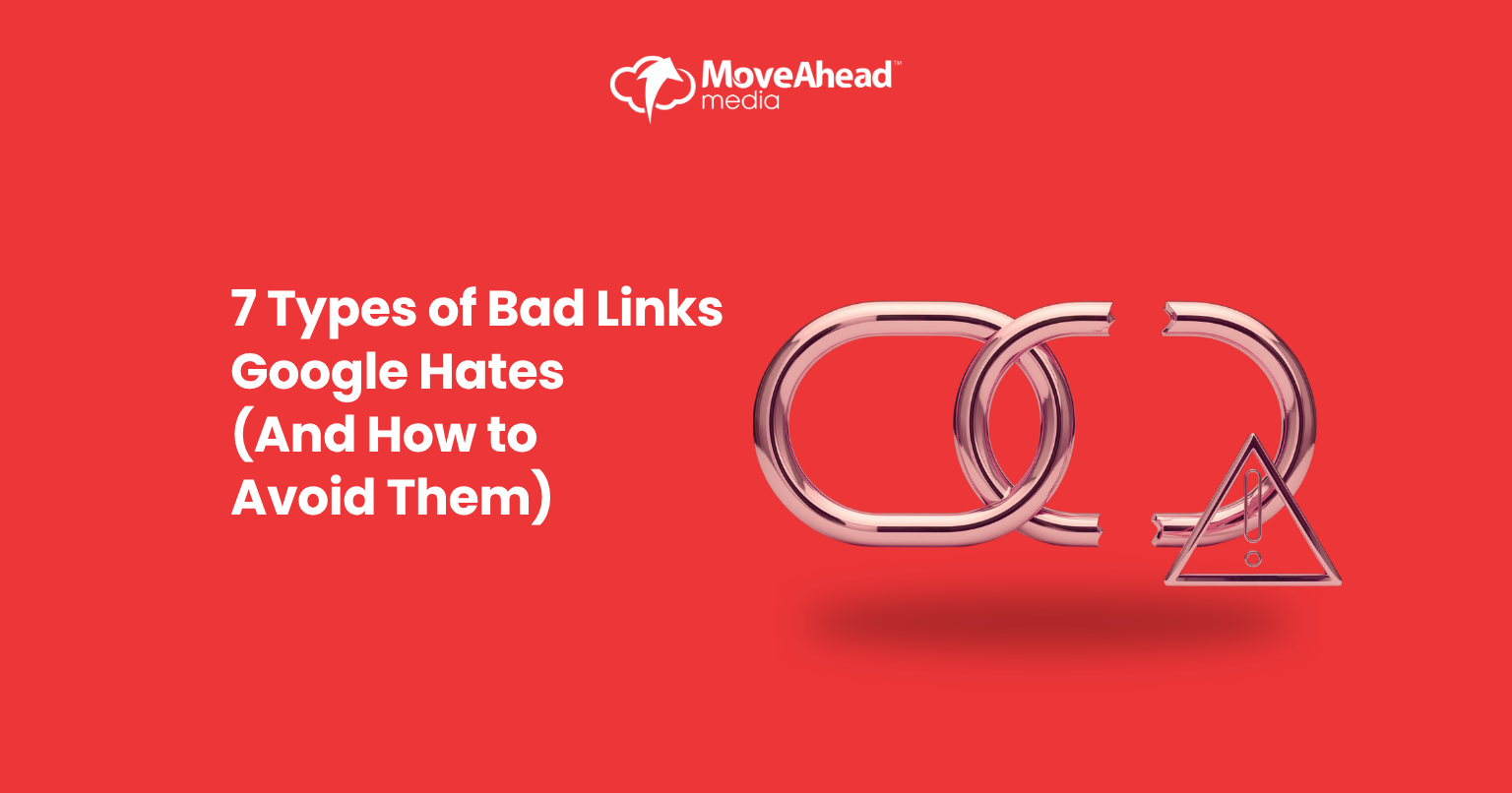
In this article, we’ll outline the seven most common types of toxic links to avoid when trying to rank better on Google. We will also provide effective strategies to help you improve your link building efforts, regardless of whether you’re doing the work yourself or looking to work with an SEO link building agency to provide a backlink building service.
Understanding Bad Links: What They Are and Why They Matter
A “bad link”, also known as a “toxic backlink,” is essentially a hyperlink that points towards your website from somewhere else on the internet. The definition of these links varies from one source to the next… but they typically refer to links that Google would consider to be spammy or acquired only as a way to increase a website’s search rankings.
Google works incredibly hard to ensure that users are only presented with content that is relevant and high-quality. These low-quality backlinks often go hand-in-hand with spammy or poorly written copy. This is why many companies choose to pay more for a backlink service provider who can help their content remain relevant to their current activity and will support their current goals, as opposed to just being a cheap shortcut with no promise of success.
The SEO Impact: Why Google Penalises Unnatural Links
The consequences of having a poor backlink profile can vary from being frustrating, stemming from a lack of rankings, to a sitewide penalisation. For your information, a penalisation is similar to being blacklisted by Google – this is something we want to avoid. At their very best, low-quality backlinks have no impact on your website performance, meaning they’re essentially worthless, while on the other end of the scale, they can trigger demotions and long-lasting penalties.
When your site is penalised, the impact is immediately visible. Your search rankings will plummet, organic traffic evaporates, and months or years of SEO work can be undone. This is done to protect users from websites that may be more likely to harvest data in a less-than-ethical manner. Google also does this to protect users from those site owners who may not be creating content in order to inform, but to instead exploit them and simply drive and generate traffic.
This is why finding a high quality backlinks service provider can be so beneficial. Instead of having to do the guesswork and ending up with lasting consequences, website administrators can place their trust in those who know how to earn authority and ensure that their hard work will be recognised and rewarded by Google.
The 7 Types of Bad Links You Must Avoid
Directory Links
While getting a link from a directory might seem like a good idea, they offer little in terms of SEO benefits. Directory links are easily accessible and often have no relevance to your on-page content, which can put your current efforts at risk. Instead, look for trade journals and relevant industry publications where you can post guest content.
Comment Spam / Guest Post Spam
Posting content referencing your website without any true strategy, especially on websites with little relevance to your own. This can cause more harm than good. While it might sound like a good idea to leave comments linking back to your website, or write guest posts with embedded links, these are often marked as being spammy.
Links From Foreign Sites In A Different Language
Google places a strong focus on relevance. When a backlink from a website that’s primarily written in a language that’s not your own will come across as spammy. Also, an anchor text that contains keywords in a different language is unlikely to have any impact on your performance. We’d recommend saving your energy and focusing on gaining backlinks using content written in your native language.
Link Building From The Countries You Don’t Do Business In
Similarly to our last entry, backlinks from countries with no relevance to your own business goals won’t do much to help you, and certainly aren’t worth the effort when that time would be better used focusing on growing your domestic backlink profile. While these backlinks once held some significance, Google no longer holds these links in such high regard.
Links From Irrelevant Sites
Low quality backlinks from domains that have little in common can do more harm than you might imagine. Because these links may be designated as being spammy by Google, you can also be tarred with the same brush and could suffer from the same fate. If Google thinks that you may also be spammy, you’ll likely be penalised and could see your rankings and traffic drop.
Misleading Anchor Text
When you’re trying to get links from websites, make sure that you’re not using misleading anchor text. If you’re getting a link from a website with the anchor text “football equipment”, but the landing page content is centred around sunglasses and eyewear, Google will likely detect it, and your website may get penalised. Simply put, make sure that you’re using relevant anchor text and your landing pages contain quality content.
Links From Low-Quality Sites
Low-quality, content-farming websites are usually created for the purpose of SEO, which means that they’re not providing any value to their readers. In most cases, these websites are filled with generic content, gibberish, and intrusive ads. If you build links from low-quality sites, your website will likely get penalised. This is why you should first determine the quality of a website by using Google’s PageRank tool.
Identifying and Mitigating Bad Links
When working to identify and mitigate potentially harmful links, it pays to be vigilant. Rather than ignoring these links, which may have already caused irreparable or long-lasting harm, you should try to mitigate their impact and set things going in the right direction immediately. You can get started by performing a backlink audit, and while you can use tools such as Ahrefs and SEMrush to help, it should always start by asking a few simple questions…
- Is the referring domain strong or weak?
- Is the referring site’s content related to yours?
- Is the backlink’s anchor text overly promotional or irrelevant?
- Do professional tools flag the domain as low-trust or high-risk?
- Does the referring website look like a content farm or a spammy directory?
If a backlink fails any of these questions, there’s a good chance that it may be causing damage to your backlink profile. If you’ve recently noticed this backlink appear and have an unexplained drop in traffic, however minor it may initially seem, you should take proactive action. As we’ll touch upon later, you can use Google’s Disavow Tool to show that you’re taking them seriously and that you don’t want to associate your website with their (often spammy) referring domains.
Building a High-Quality, Ethical Link Profile for Success
While identifying and removing bad links is crucial for mitigation, a forward-looking strategy focuses entirely on earning the good ones. The future of link building lies in ethical, white-hat practices that align perfectly with Google’s desire for quality and relevance.
Now that you know what to avoid, what actually makes a good backlink? When defining ideal targets, Helen Pollitt, Director of SEO at Getty Images, emphasises that “the best source of a link is a website that is both considered authoritative and relevant to your website.” When you provide credible sources your audience can learn from, you build genuine trust, and Google takes notice.
Working with an SEO link building agency can be a positive first step for businesses wanting to improve their link building capabilities while still staying on the right side of Google’s search guidelines.
By contracting an agency to provide SEO link building services, you can be sure that your business will have a clear strategy that’s focused on earning natural links through valuable content. This, combined with organic outreach efforts and genuine digital PR activity, will deliver sustainable success without putting your website’s longevity at risk.
Remember that SEO is more of an oil tanker than a speedboat; it’s slower to get going but hard to stop once it gains momentum – any good SEO expert will help manage expectations from the onset.
Interested in learning more? Here are some additional resources: