
With artificial intelligence rapidly changing the face of Google and disrupting the digital realm, many business owners are asking a fair question: is investing in SEO still a smart move?
The short answer is yes, BUT there’s a lot more nuance to it than that; because your strategy must shift from chasing rankings to driving revenue.
Remember: you don’t get paid for web traffic – you get paid for leads and sales. Which is why you need a clear plan that focuses on what delivers a tangible return, without wasting time on algorithm updates that don’t impact your profitability.
If you feel untethered, read this SEO guide in 2026. Forget the jargon and all the pomp and fuss. This piece focuses on the durable strategies that will keep your business profitable in the years ahead.
The Future of SEO: What to Expect in 2026
The biggest shift is what happens before a user ever clicks. The top of Google is no longer just a list of ten blue links as it has been for so many years; it is now an AI-powered answer machine.
The Impact of Generative AI Search Engines
For most searches, Google is now increasingly providing an AI-generated summary. This means fewer clicks for simple queries. If your entire strategy is based on ranking for broad, informational keywords, then your traffic is at risk.
Every click you do get must be of higher value and of higher intent. Which makes your goal a simple one: become a source of truth that Google’s AI simply cannot ignore. This takes a deeper focus on original insights and first-hand experience – which are all things that can’t be easily replicated. This is now at the very core of effective AI search optimisation.
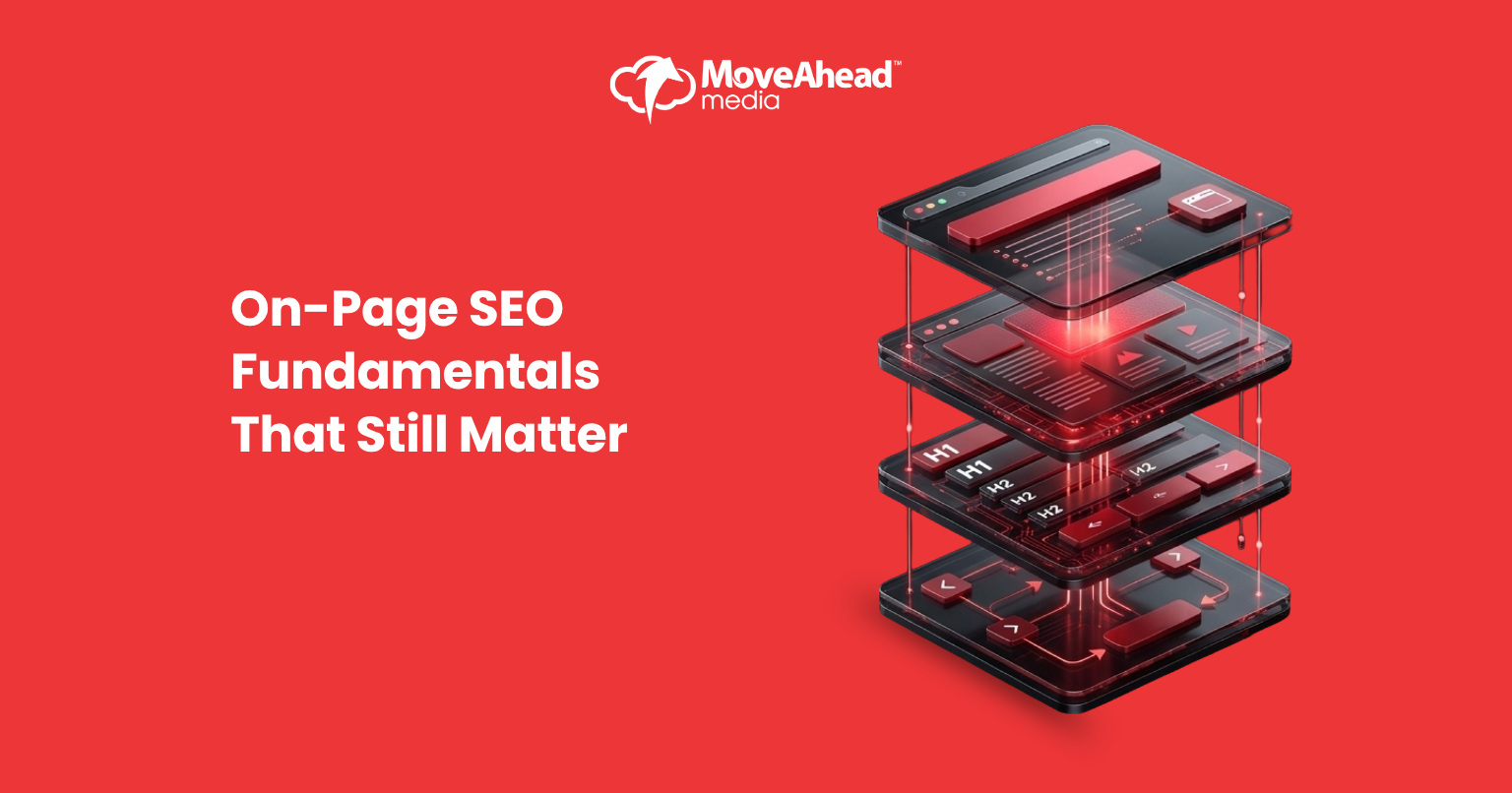
On-Page SEO Fundamentals That Still Matter
While AI is changing the top of the page, the building blocks of a high-performing website remain the same. These are the non-negotiable on-page SEO basics that signal quality to both users and Google:
- Page Titles That Compel Action: Your title tag is your single chance to win the click against three other competitors. It must be specific, compelling, and directly address the user’s needs.
- Content That Ends the Search: Ask one question: “Does this page give my customer everything they need to make a decision?” If they have to click back to Google, then your content has failed. Your pages must solve problems completely.
- A Structure That’s Easy to Scan: People don’t read online; they scan. So, use clear headings (H1, H2) to break up your content into logical sections, thus making it easy for busy users to find what they need as quickly as possible.
- Internal Links That Guide the Journey: Linking to other relevant pages on your website guides potential customers towards conversion and helps Google understand the depth of your expertise. Strong on-page SEO optimisation relies on this (see what we did there?)
Technical SEO Made Simple
Most websites don’t fail because they have a tonne of poor content. They fail because they’re slow, cluttered, or hard for Google to crawl. Technical SEO is a foundation – so if it’s uneven or inflexible, nothing you build on top of it will be stable.
For business owners, this technical SEO guide comes down to three things:
- Speed is a Conversion Metric: Every second a customer waits for your page to load is a direct hit to your profit. A fast website is a core requirement for keeping users engaged and converting.
- A Flawless Mobile Experience: The majority of your customers will find you on a smartphone. If your site is difficult to use on mobile, then you are actively turning away business. It’s that simple.
- A Clean, ‘Crawlable’ Structure: Google must be able to find and understand your most important pages easily. Professional technical SEO services make sure there are no technical roadblocks preventing your best content from being seen and doing its job.
Building Authority and E-E-A-T
In a world flooded with generic, AI-generated content (or ‘slop’ as it is unaffectionately referred to), your greatest competitive advantage is being a real, credible, and trustworthy business. Google’s framework for measuring this is called E-E-A-T.
This is how Google separates genuine experts from the inequitable noise. For businesses in high-stakes industries like finance or health, demonstrating strong E-E-A-T SEO is essential for survival.
Here’s how you prove it:
- Prove Your Experience: Show, don’t tell. Use detailed case studies, before-and-after project photos, and content that speaks from real-world expertise.
- Showcase Your Experts: Put a face to your business. Author bios, team pages with qualifications, and industry credentials show that real people are behind your brand.
- Earn Authoritativeness: This is about third-party validation. Mentions and links from respected industry sites are powerful votes of confidence that you can’t buy. This is what strategic link building strategies achieve.
- Demonstrate Trustworthiness: Make it effortless for customers to see you are legitimate. Prominent contact details, transparent policies, and authentic customer reviews are non-negotiable trust signals.

Keeping Your Strategy Future-Proof
The future of SEO isn’t chasing algorithm loopholes. It’s building a brand that people (and therefore search engines) actively trust and prefer.
Your priority for 2026 is to create the best, most helpful content in your industry, deliver it via a technically flawless website, and back it up with undeniable proof of your real-world authority.
That’s it.
That’s the strategy.
Instead of reacting to every new trend, build a robust digital foundation prepared for whatever comes next.
If you’re ready to implement a strategy designed for long-term, profitable growth, it’s time for us to talk.