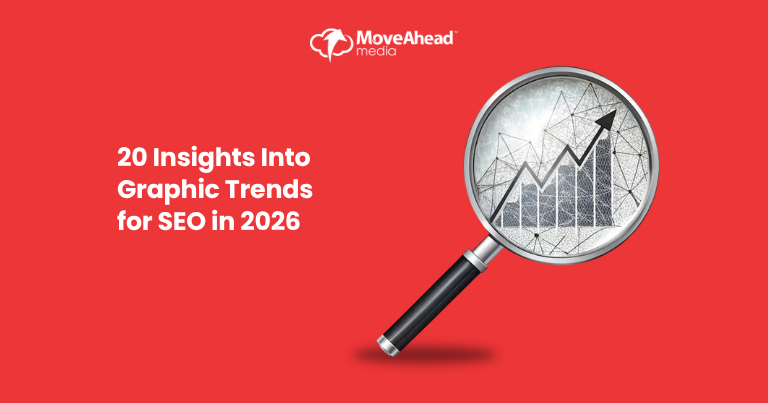
We’ve spent decades obsessing over the perfect keyword and the strongest backlink. ‘What keywords can we target for this content?’ We can practically see the eye rolls. It’s a question from teams that haven’t caught up to the reality of 2026 – teams still stuck on legacy SEO lingo and strategies that need a highly anticipated upgrade.
Looking at today’s digital landscape, the same search engines scrutinising our content are still very much present.
However, their role is shifting from indexing text to interpreting experiences.
Enter visual storytelling.
In this blog, we delve into the graphic design trends you need to know to strengthen your SEO, prove your authority to the algorithm, and capture the engagement that keywords alone can no longer sustain.
Why Visuals Matter for “Meaning and Trust”
In 2026, Google is on the lookout for brands that demonstrate a degree of E-E-A-T (Experience, Expertise, Authority, Trust).
What does that mean? Well, if your visuals are painfully generic, you’re openly telling the algorithm that you have no first-hand experience. And that’s definitely not something that you want to boast about.
Conversely, using the right visuals can validate your claims. They offer concrete proof of your expertise. Rather than emulating what everyone else is saying or doing, you’re bringing more to the conversation and deepening a sense of trust that surpasses words.
Search engines can tell the difference. They know when your visual data doesn’t correlate with what’s written. Or when you don’t provide any new information, effectively flagging your content as redundant. This is why visuals are crucial for establishing trust and credibility.
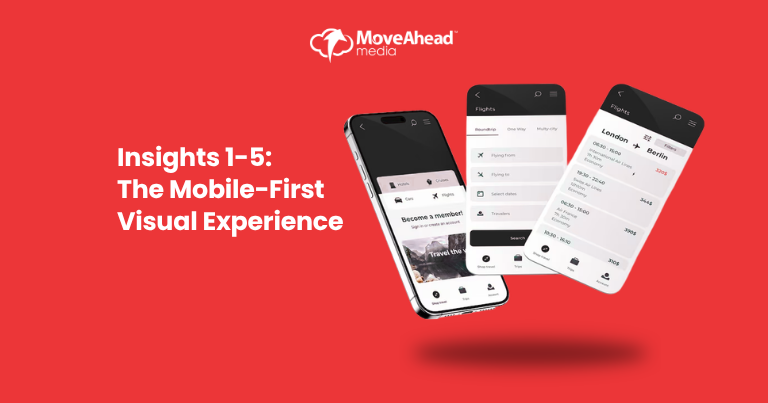
Insights 1-5: The Mobile-First Visual Experience
Whether we admit it or not, we’re constantly on our phones – scrolling, looking up recipes, and making yet one more online purchase.
Internet penetration in Thailand has hit a staggering 94.75%, turning the smartphone into the primary interface of reality. In this environment, visual search ranking becomes vital for brands that want to be discovered.
To stay competitive, your strategy must prioritise these five design elements:
1.Vertical-First Storytelling
Your primary assets must be designed for the vertical scroll (9:16 or 4:5 aspect ratios). If a user has to rotate their phone to understand your chart, you’ve already lost the engagement signal.
2.Zero-Latency SVG Assets
Your consumers are always in a rush. That’s why high-performing sites in Thailand use formats like AVIF for photos and SVGs for icons. These load instantly, ensuring your visual proof doesn’t trigger a Core Web Vitals penalty.
3.Thumb-Zone Interactivity
Algorithms now track Interaction to Next Paint (INP). By placing interactive elements, like an ‘expand’ button, within the natural reach of a user’s thumb, you trigger the engagement waves that tell Google your content is high-utility.
4.Haptic Design Cues
Incorporate tactile visuals. These are the elements that look like they have physical depth or texture. In 2026, when a graphic looks touchable, it encourages taps and scrolls that contribute to deeper on-page engagement signals.
5.Dark-Mode Native Graphics
With a significant percentage of mobile users browsing in dark mode, your graphics must be ‘dual-native.’ Using transparent backgrounds and high-contrast palettes ensures your charts remain legible (and your bounce rate stays low) in any lighting.
Insights 6-10: Schema and AI Recognition
Before the rise of AI, our primary goal was to captivate our audience. How can we speak to them? What messages will resonate? While those questions still matter, in 2026, you’re designing for two audiences: the human eye and the machine vision of the algorithm (I know, right… what kind of multiverse are we in?).
That’s why visual SEO trends are changing. You need to learn how to ‘code-switch’ your graphics. You’re essentially translating your visual brand into a structured language that AI can index and cite.
6.Entity-Linked Schema
AI search systems use structured data like ImageObject schema to better interpret what’s in your photo. Let’s say you posted an unpolished, behind-the-scenes shot of your team in Bangkok. It’s authentic, exactly what AI looks for. Including specific entities in your code, like your founder’s name or a verified location, can instantly strengthen your credibility.
7.OCR-Optimised Typography
Your infographics are now searchable by text. Search engines use Optical Character Recognition (OCR) to read the pixels in your charts. Using clean, high-contrast fonts ensures your data is indexed as primary source material. If AI systems can read your chart clearly, your content becomes more likely to be referenced in AI-generated summaries.
8.Semantic Alt-Text
In 2026, alt-text is used for context. Write descriptive summaries that explain the intent of the visual. This helps multimodal models (like Gemini) understand exactly when to pull your image into a generative response for a user.
9.AI Origin Transparency Tags
Authenticity will always hold the most weight. Using C2PA metadata or ‘Human-Made’ tags shows integrity. Many brands might resort to AI-generated visuals, which can feel repetitive, even for the algorithm. If you have real experiences, don’t be afraid to use them.
10.Modular Grids for Extraction
Design your graphics in modular blocks. AI crawlers find it much easier to extract information from organised layouts than from cluttered designs. This makes your content highly citable for AI assistants and improves your image optimisation for SEO.
Insights 11-15: Localisation and Cultural Relevance
Many businesses think it’s enough to slap any photo of a glimmering skyline into their marketing. New York, London, or Bangkok, what does it matter if the skyscrapers look somewhat similar?
Spoiler alert: it matters for your visual search ranking.
Believe us, both people and the algorithms are more astute than you think. While a local will instantly feel the disconnect of an anonymous skyline, the algorithm is also busy reading those visual cues to decide if your content is truly relevant to the community you’re targeting.
To avoid this, you need to understand how to localise your content (not to be confused with local SEO).
Local SEO focuses on the technical side, such as keywords like ‘near me,’ Google Business Profiles, and map citations, whereas localisation is the cultural and visual adaptation of your brand.
11.Hyper-Local Visual Cues
AI vision is so advanced that it can identify regional landmarks with frightening accuracy. It knows the difference between a generic skyscraper and the silhouettes of the MahaNakhon building. Using original, hyper-local photography provides a geographic trust signal that tells Google you don’t need a VPN to reach your audience. You’re present in the Thai market, and that’s the best place to be.
12.Typography
Your font type is a key reflection of your brand’s personality, values, and cultural fluency. For example, a cutting-edge fintech startup that uses Times New Roman doesn’t look like an innovator. They look clumsy and spaced out. On the other hand, a modern, sleek font indicates forward-thinking and Multimodal search readiness.
13.Sanuk and Humorous Visuals
Thai culture thrives on Sanuk (fun) and playful wit. In this case, sprinkling some light-hearted animations or thoughtful humour in your graphics can be impactful. Think of it this way: the more people engage with your visuals, the stronger your overall search visibility becomes. Trust compounds.
14.Line-Integrated Interactive Assets
Consider the market you’re in. For a Thai user, the conversion doesn’t happen on a contact form. More often than not, it happens on LINE. This poses an excellent opportunity for you to design your visual assets with ‘Add LINE’ QR codes or ‘Chat with us’ buttons – built directly into the thumb-zone. Remember, web design is a huge part of SEO. If users can’t reach you easily, engagement drops, and that weakens overall search performance.
15.Social Proof (KOC) Imagery
Your customers will naturally be drawn to brands that aren’t afraid to be authentic. It’s one of the key visual SEO trends in 2026. You don’t need to conjure up the perfect image with no flaws detected. Contrary to popular belief, perfection is actually a sign of caution. The digital marketing world is drowning in synthetic, so raw Key Opinion Consumer (KOC) imagery inevitably stands out. And more importantly, creates a sense of genuine connection.
Insights 16-20: User Engagement & Interactivity
The entire point of SEO is to get found by your ideal audience and craft a message so alluring that they feel compelled to take action. What we’re really talking about here is engagement. In the digital marketing realm, you’re creating a data trail for the algorithm. High engagement serves as validation of your authority and relevance in the eyes of both users and search systems.
16.Responsive Feedback
You want users to have the best experience possible. Use micro-animations to give users instant confirmation when they click or hover. This proves your site is alive and responsive (boosting your INP score).
17.Interactive Tools
The true test of quality is when a user takes their time on your site, feeling no rush to leave. Interactive tools, such as calculators, price estimators, or Style Finders, are effective ways to increase dwell time.
18.Narrative Scrolling
Use ‘scrollytelling’ to reveal your story as the user moves down the page. It turns a boring read into an immersive journey that guides the user toward your CTA.
19.Engagement Quizzes
Quizzes encourage users to spend more time interacting with your content. You learn exactly what sparks their interest, allowing you to personalise the CTA at the end.
20.Smart Personalisation
Modern visual SEO trends are heavily rooted in personalisation. Notice how top-tier design elements prioritise ease and relevance. Use ‘Recently Viewed’ or ‘Recommended for You’ blocks to make the site feel like it was built specifically for that one visitor.
Conclusion: Designing for the Algorithm
Designing for the algorithm doesn’t have to be a hard, dreary process. You don’t need to start assigning hundreds of tasks to your team. In fact, SEO in 2026 is less about a complete overhaul and more about incremental optimisation.
Start with one or two trends that align with your current goals. It could be as small as deciding your typography or micro-animations for interactivity – and watch how your engagement metrics respond. For businesses looking to connect these improvements with a broader organic strategy, our SEO services in Bangkok focus on search visibility alongside user experience and website performance.
If you’re looking for specialised guidance, we’re a web design agency in Bangkok with over 15 years of experience helping businesses increase their online visibility. Reach out to our team today to get started!

Frequently Asked Questions (FAQs)
Do images help SEO ranking?
Yes, but no longer just through Alt Text. In 2026, images drive rankings by improving Core Web Vitals (speed) and Dwell Time (keeping users on the page). High-quality, original images also rank in Google Lens and Visual Search, which now account for a significant portion of mobile traffic
What is the best image format for websites in 2026?
AVIF is the gold standard for 2026. It offers up to 50% better compression than WebP without losing quality.
- For Photos: Use AVIF with WebP as a fallback.
- For Graphics/Logos: Use SVG (Scalable Vector Graphics), as they are infinitely scalable and have tiny file sizes.
- Legacy: Keep JPEGs only as a safety net fallback for extremely old browsers.
How does Google read text inside images?
Google uses advanced Optical Character Recognition (OCR) powered by its Gemini AI architecture. It doesn’t just see the text; it understands the context.
It can index statistics from a chart. It can read ingredients on a product photo.
It can even identify a Menu from a photo of a physical board.
Are infographics still effective for SEO in 2026?
Absolutely, but they’ve evolved. In 2026, they are less about backlink bait and more about information density. Because Google can now index the text inside the infographic, a well-designed data visualisation can help you rank for specific long-tail questions and how-to searches that a text-only blog post might miss.