Every business owner in Bangkok, Chiang Mai or Phuket eventually asks the same question, either at the start of their SEO journey or once they realise that their website could be working much harder for their business than it currently is.
Is it actually worth paying for SEO services in Thailand, or is it just another marketing buzzword?
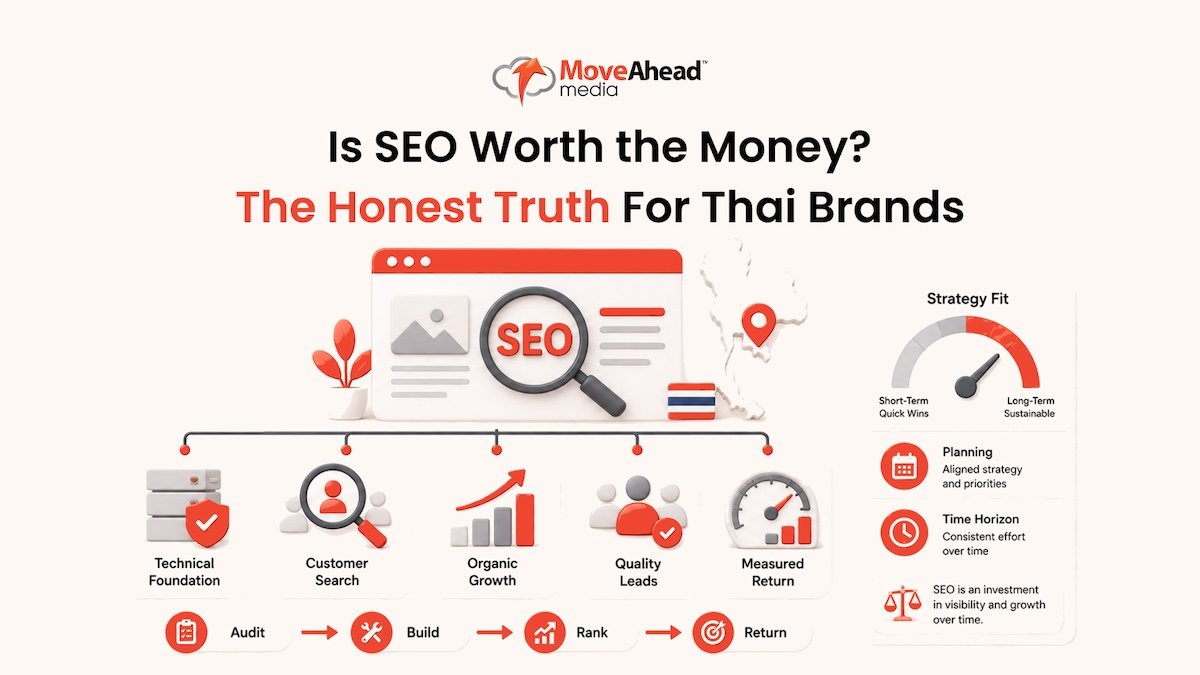
The honest answer is that it depends on how the strategy is built and who is building it. This article breaks down when SEO pays off, when it doesn’t, and how to make sure the investment works for your business.

Renting Space (Ads) vs Owning the Land (SEO)
Think of paid advertising as renting a shop and having your goods and services on display. The moment you stop paying the rent, the shopfront disappears, and so does the footfall. That is exactly how Google Ads works. If you switch off your budget, your visibility switches off with it.
SEO works differently. SEO is like buying the land the shop sits on. Rankings take longer to build, but once a page earns its place, it keeps working without needing ongoing investment.
Many Thai businesses use both. Paid media, including Google Ads, can deliver fast, short-term visibility while an SEO foundation is being built underneath it.
These two approaches can be effective alone or combined into one holistic strategy. They serve different purposes, and the smartest budgets in Thailand tend to split spend across both rather than betting everything on one option.
The Long-Term ROI of SEO in Thailand
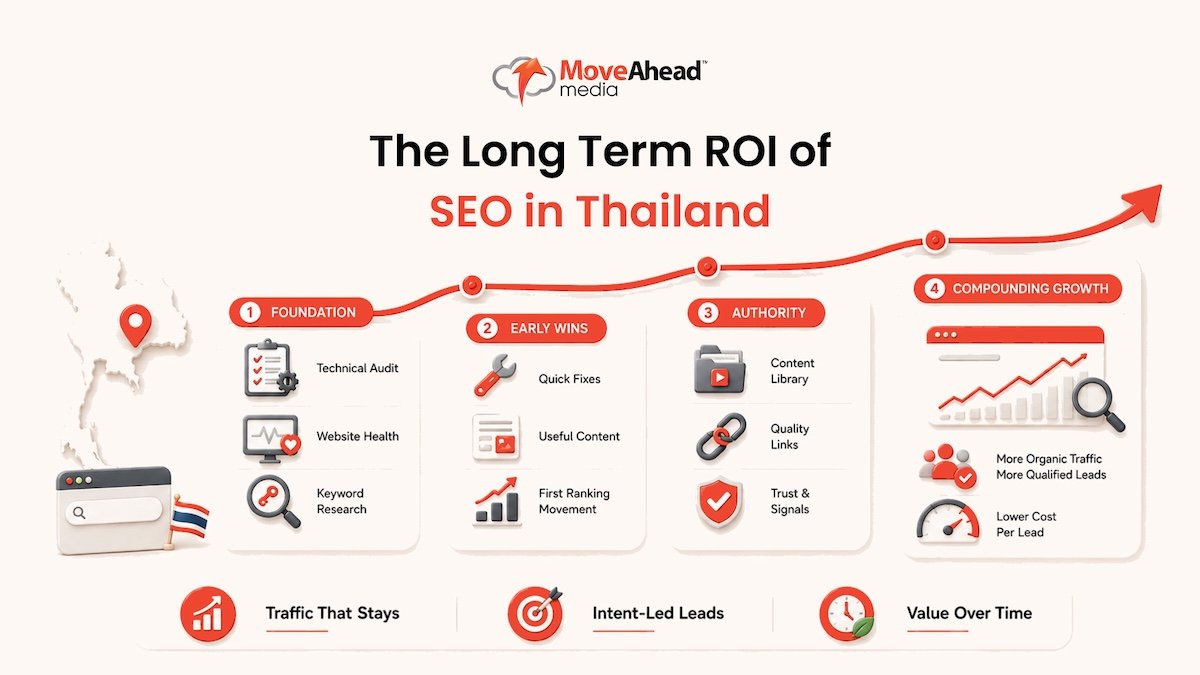
This is where the real conversation about SEO ROI Thailand needs to happen, because SEO is a compounding asset rather than a one-off transaction. When we think of SEO in Thailand, it’s best to compare it to an oil tanker instead of a speedboat; it’s slow to get going, but almost impossible to stop once it’s heading in the right direction.
With a vast majority of Thailand’s population now online, the audience searching for local products and services is growing every single day. A well-optimised website should be well-positioned to capture that demand and convert it into tangible results.
A properly built long-term SEO strategy Thailand tends to show its strongest returns from month six onwards. Early gains come from technical fixes and quick-win keywords, while authority and rankings build steadily after that.
This is what separates genuine organic traffic growth Thailand businesses can rely on from a short burst of visibility. Traffic earned through search does not disappear when a campaign ends. It stays, and it tends to convert well because the visitor searched for the answer themselves.
Over a 12 to 24-month period, many businesses find the cost per lead from SEO drops well below what they are paying for the equivalent lead through paid channels, such as Google Ads.
When SEO is NOT Worth the Money (Yes, We Said It)
SEO is not the right fit for every business at every stage of growth, and it is worth being upfront about that. We’d rather give businesses the advice they need to succeed than take their money even when we know that SEO might not be the right solution.
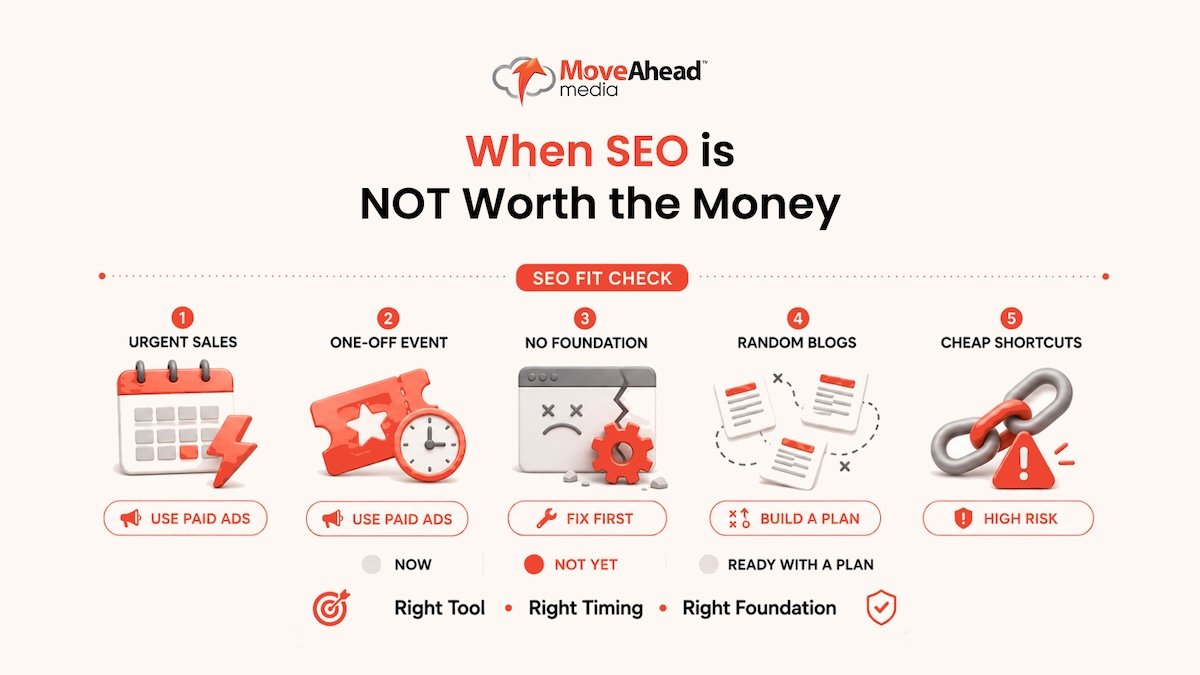
A brand needing sales this week, perhaps for a limited stock clearance or a one-off event, will not see SEO deliver in time. Paid ads are a better tool for genuinely urgent, short-term needs.
SEO also struggles to justify itself when it is treated as a box-ticking exercise. A handful of blog posts published without technical groundwork, keyword research, or a content plan behind them rarely produce meaningful results.
The other trap is chasing the cheapest possible provider. Affordable SEO for Thai businesses does exist, but affordability should mean smart, efficient work rather than shortcuts like lightweight content or low-quality backlinks, which tend to cost more to undo later than they saved upfront.
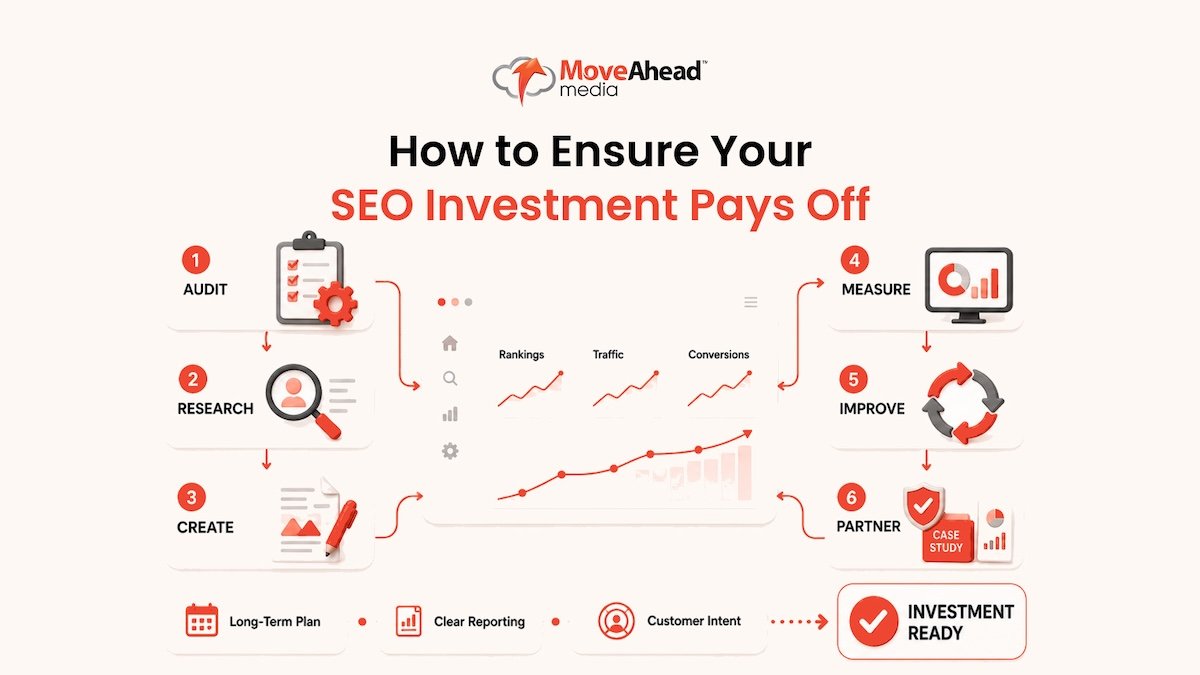
How to Ensure Your SEO Investment Pays Off
The businesses that get the most from SEO services in Thailand usually share a few habits in common.
They treat SEO as a long-term strategy rather than a quick fix, and they build content around what their actual customers are searching for rather than simply guessing.
They also work with a proper SEO agency Thailand businesses trust to be transparent, one that reports on rankings, traffic, and conversions rather than vanity metrics alone.
Choosing the right partner matters more than almost anything else. Reviewing SEO services in Thailand from an established agency, backed by case studies and clear reporting, is a good starting point before committing budget.
For businesses unsure of where their current website stands, it is worth arranging a proper technical review first. Get a free SEO audit to see exactly what is holding a site back before spending anything on a strategy.