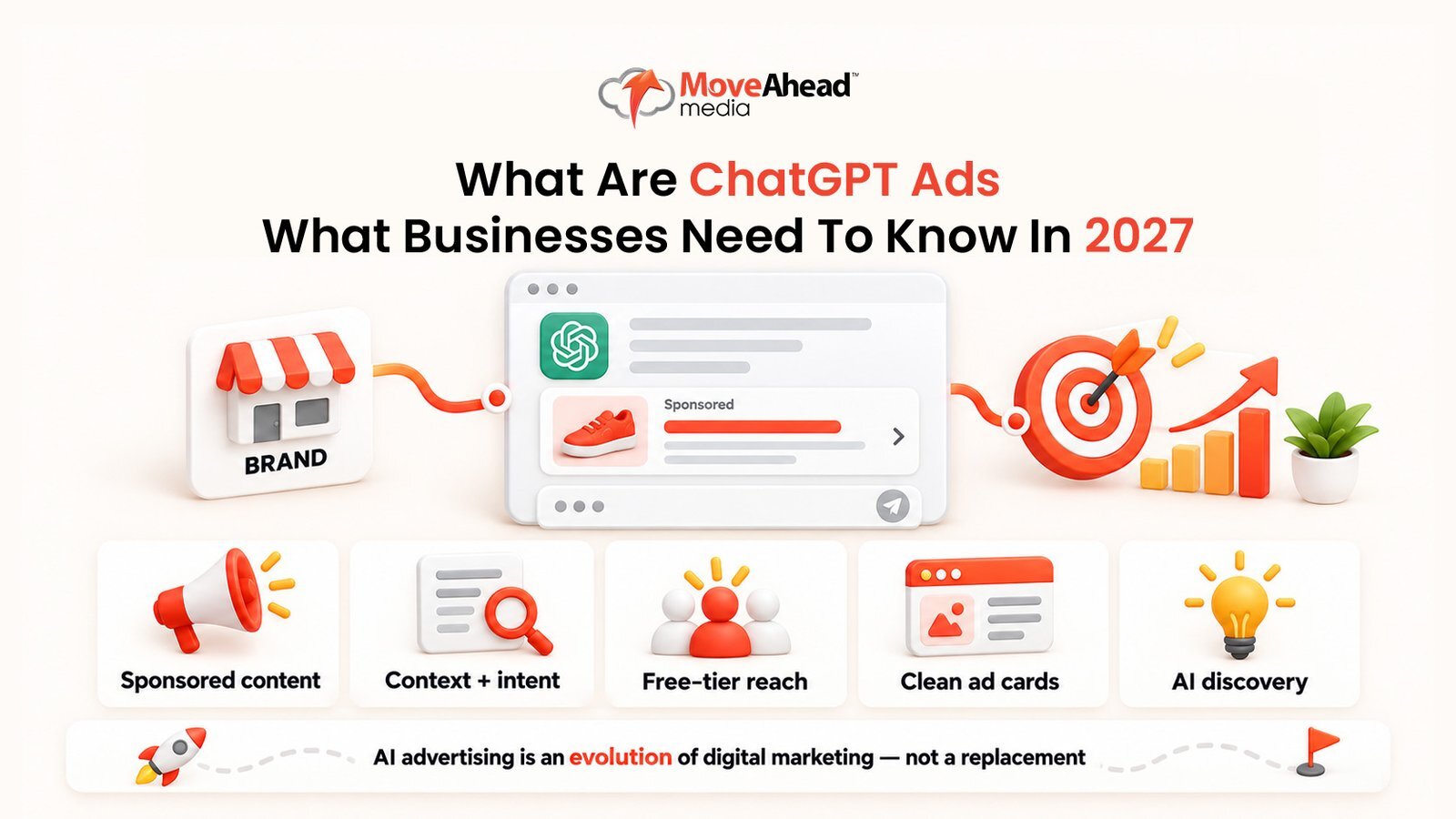
ChatGPT this, ChatGPT that. By now, we’ve added something else to the mix: ChatGPT ads.
The conversation is already happening, whether your business is a part of it or not. More importantly, the way people buy is changing as we speak, and if you’re not leaning in to listen, you’re missing a pivotal milestone in digital marketing.
So, what exactly are ChatGPT ads? Let’s get right into it.
What Are ChatGPT Ads?
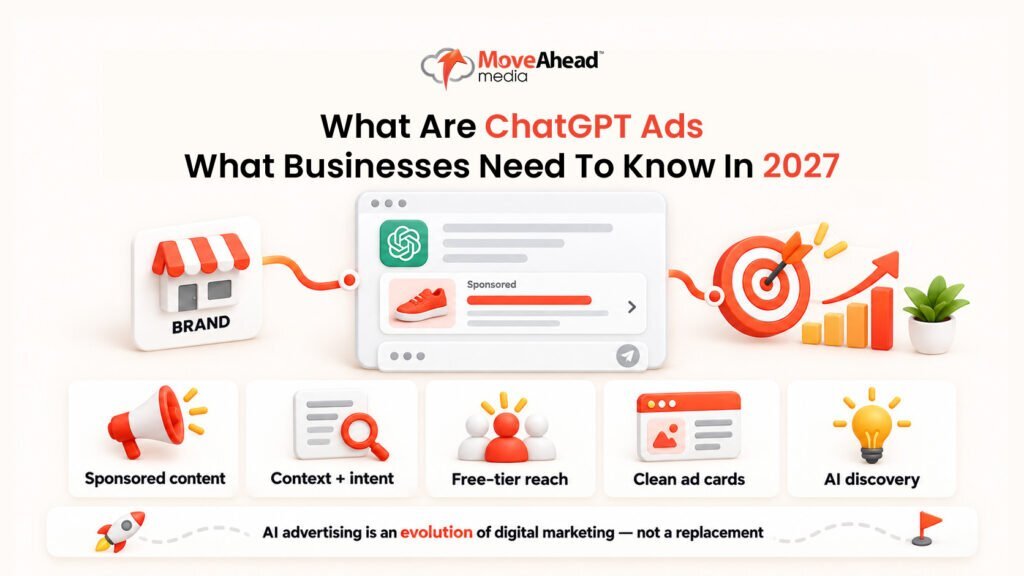
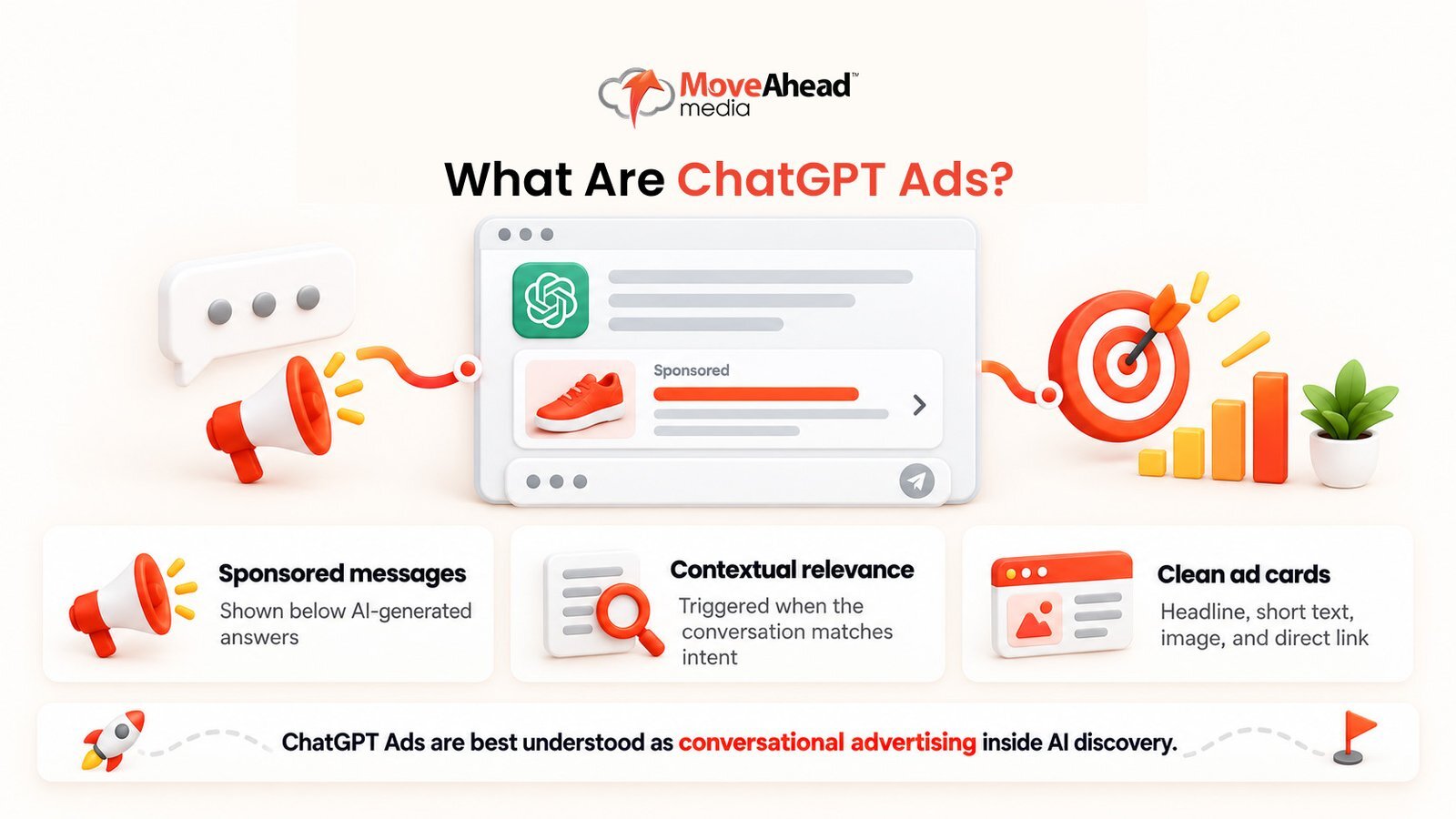
To keep it simple, ChatGPT ads are sponsored content that appear below AI-generated answers. When a user asks for recommendations or a solution to a problem, your ad surfaces right below the answer if it fits the context.
The keyword here is relevance. Think about your own experience with AI search for a minute. Have you found yourself sharing details you’d never type into a Google search bar just to get a tailored response? We know we have.
Why Is Everyone Talking About Them?
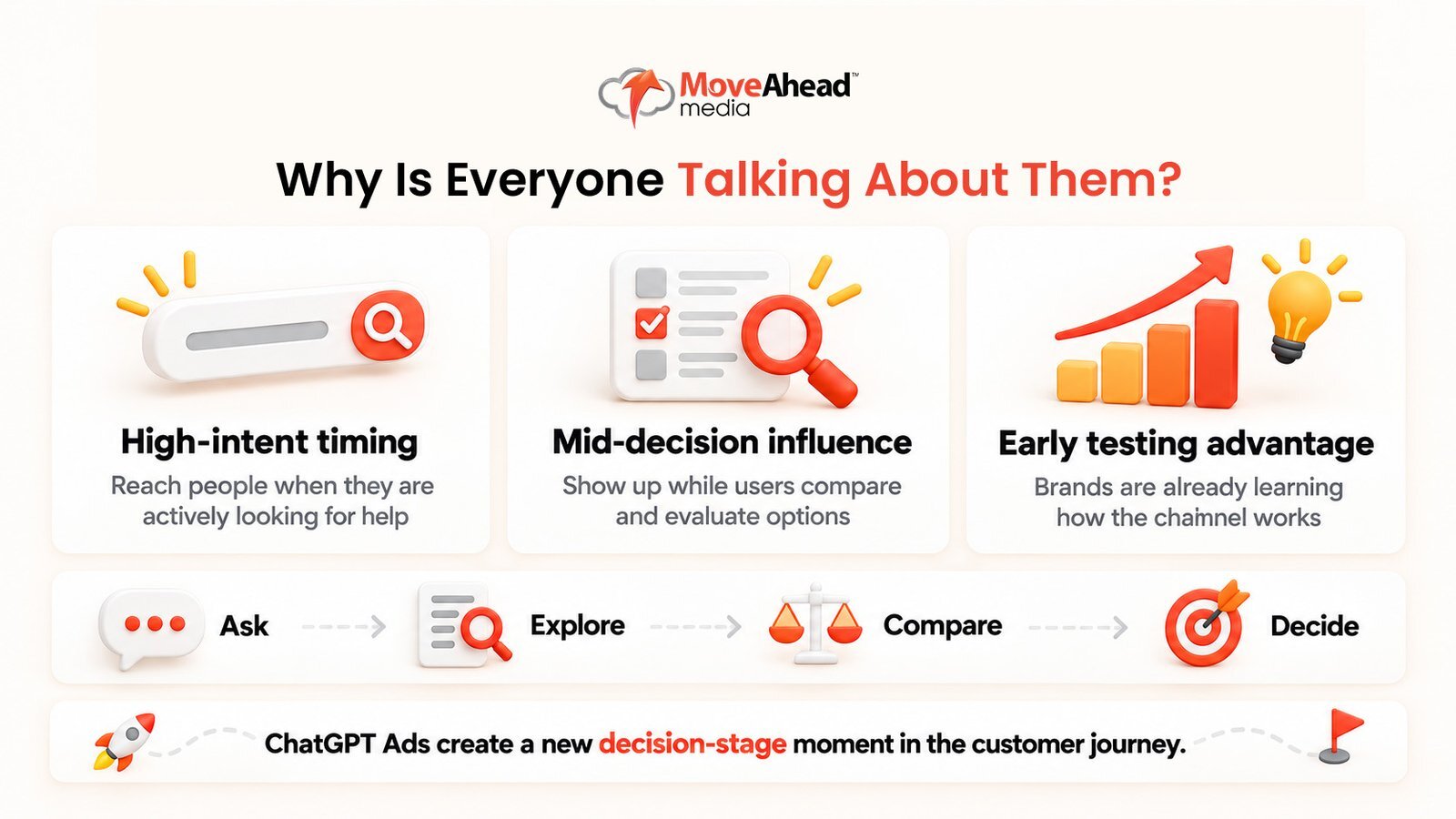
ChatGPT advertising is a channel marketers are actively allocating their budgets toward, and it’s likely already come up in your own meetings. What makes these ads so unique is the timing: they allow businesses to reach people mid-decision, when their intent is at its highest.
Imagine an ad that doesn’t rely on shouting for attention, but on delivering a relevant solution at the exact moment someone asks for help. That channel is live, and brands are already testing it.
How ChatGPT Ads May Work
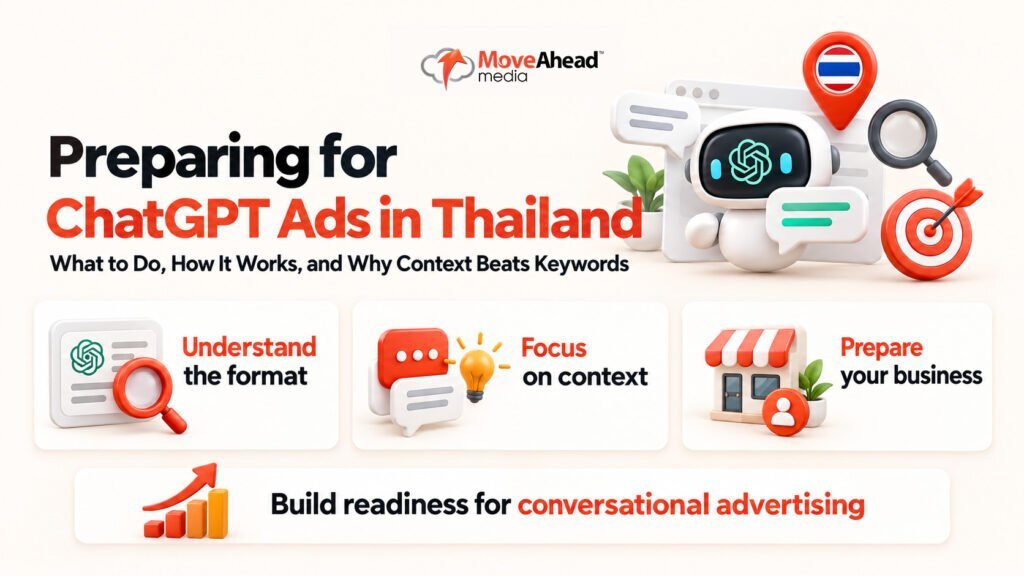
Understanding how ChatGPT ads may work in Thailand provides a first-mover advantage. Here’s what you need to know to stay prepared:
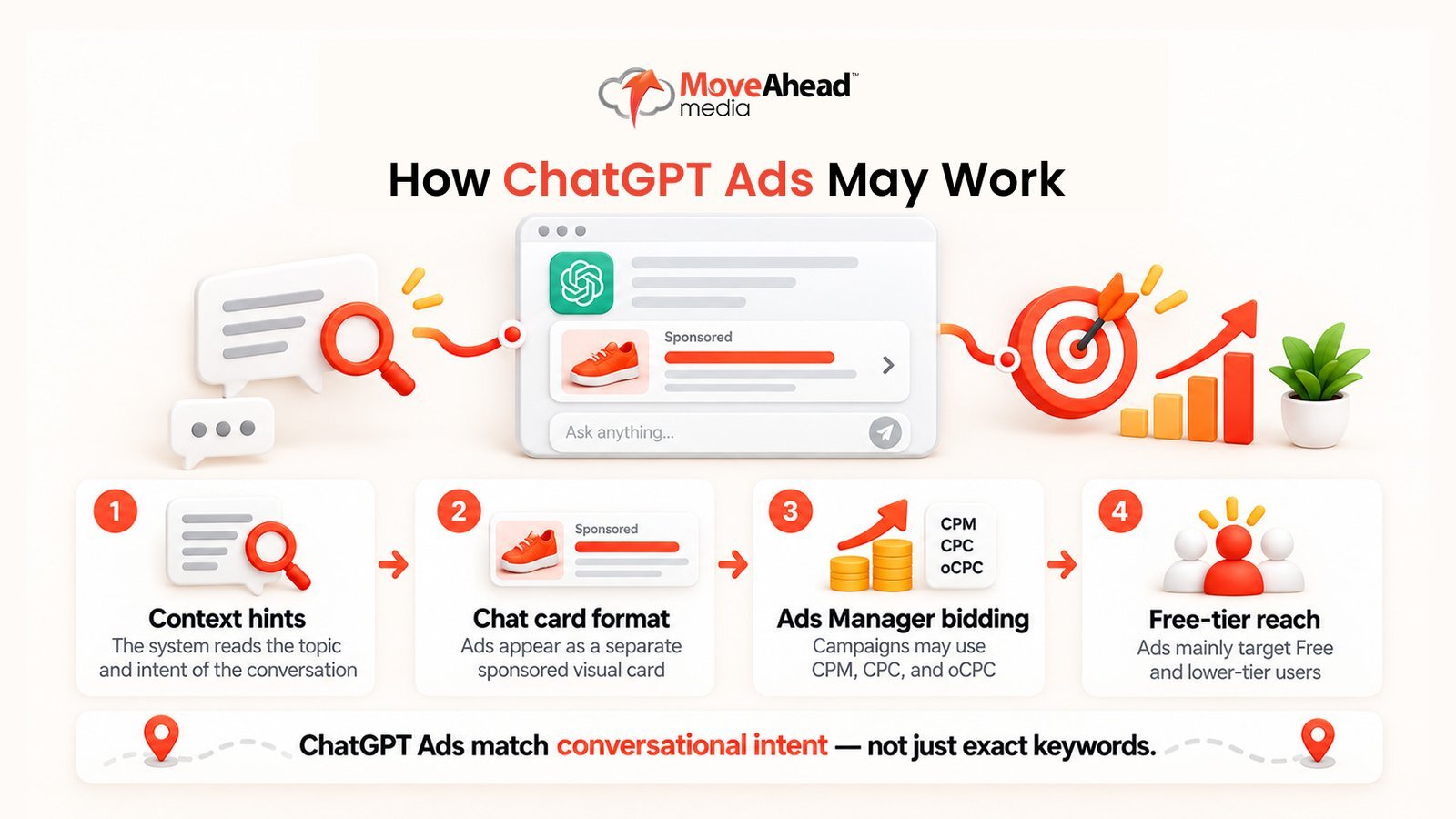
- Triggered by Context Hints: ChatGPT ads look for general intent themes. The AI decides whether your ad is relevant for the conversation based on context hints.
- The Chat Card Format: You won’t find the ads integrated into the actual conversation. Instead, they show up directly below the answer as a clean visual card featuring a headline, short description, logo or thumbnail image, and a direct URL.
- Bidding and Monetisation Models: Campaigns run through a self-serve Ads Manager setup. You can bid using standard digital metrics (CPM, CPC, oCPC) to target specific countries and intent categories.
- Targeting the High-Intent Free Tier: Ads only target users on Free and lower-tier plans. Paid subscribers remain completely ad-free.
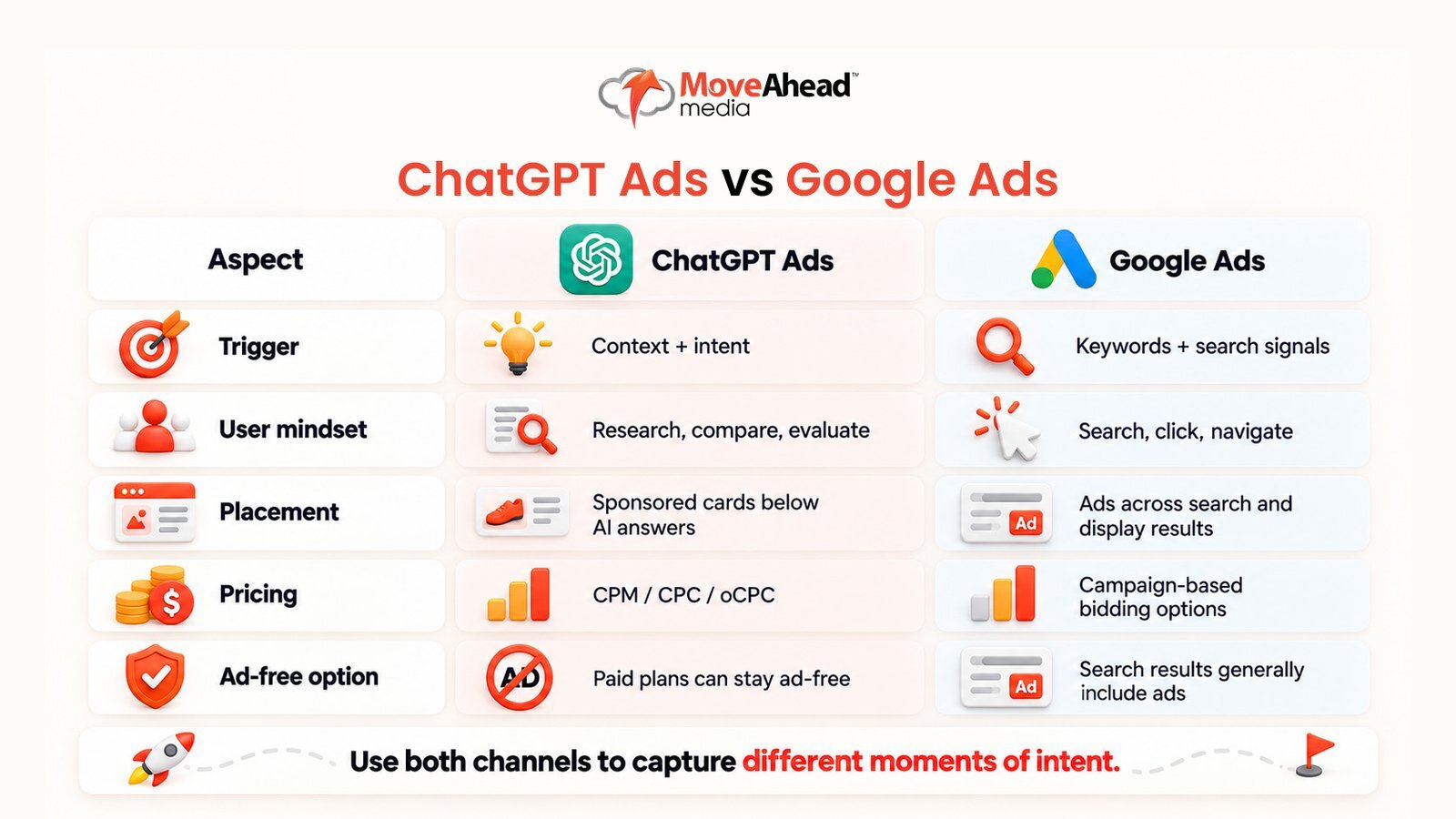
ChatGPT Ads vs Google Ads
Naturally, when something new and shiny appears, we need to hold it side-by-side with the standard:
Feature | Google Ads | ChatGPT Ads |
Targeting Trigger | Static keywords & search queries | Dynamic context hints & conversation intent |
User Mindset | Fast navigation & link skimming | Deep evaluation, comparison & problem-solving |
Placement | Integrated into search results pages | Standalone Sponsored Cards beneath AI answers |
Bidding Models | CPC & Automated Bidding | CPM, CPC, and oCPC |
Ad-Free Option | None (all searchers see ads) | Paid tiers (Plus, Team, Enterprise) are completely ad-free |
Google Ads capture intent at the keyword level, while OpenAI advertising captures intent at the decision level. An effective marketing strategy leverages both, meeting their customers when they know exactly what they want and when they’re still in the process of figuring it out.
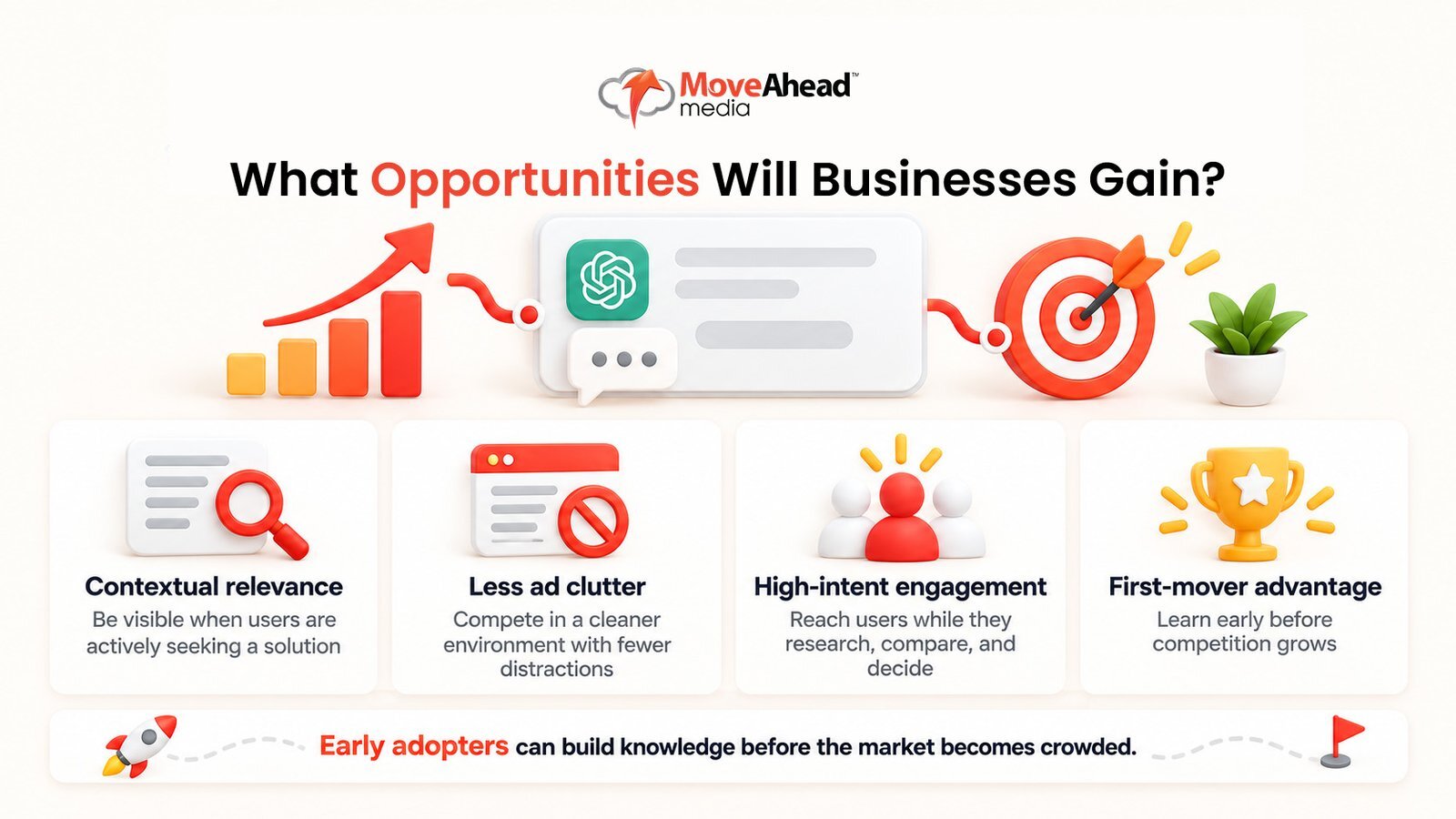
What Opportunities Will Businesses Gain?
For early adopters, launching on ChatGPT Ads offers four key advantages:
- Contextual Relevance: Your ad shows up when your customers are actively looking for a solution. Right place, right time.
- Zero Creative Fatigue: Users aren’t scrolling through hundreds of ads in a noisy feed, which means you aren’t constantly fighting for attention.
- High-Intent Audience Engagement: Free-tier users are open to exploration. They’re using ChatGPT to research, compare, and then make a decision. You can become their go-to brand before they even click on a competitor’s site.
- First-Mover Advantage: Launching early in a market like Thailand means lower initial auction competition. Businesses can find their positioning before the market becomes saturated (and it will).
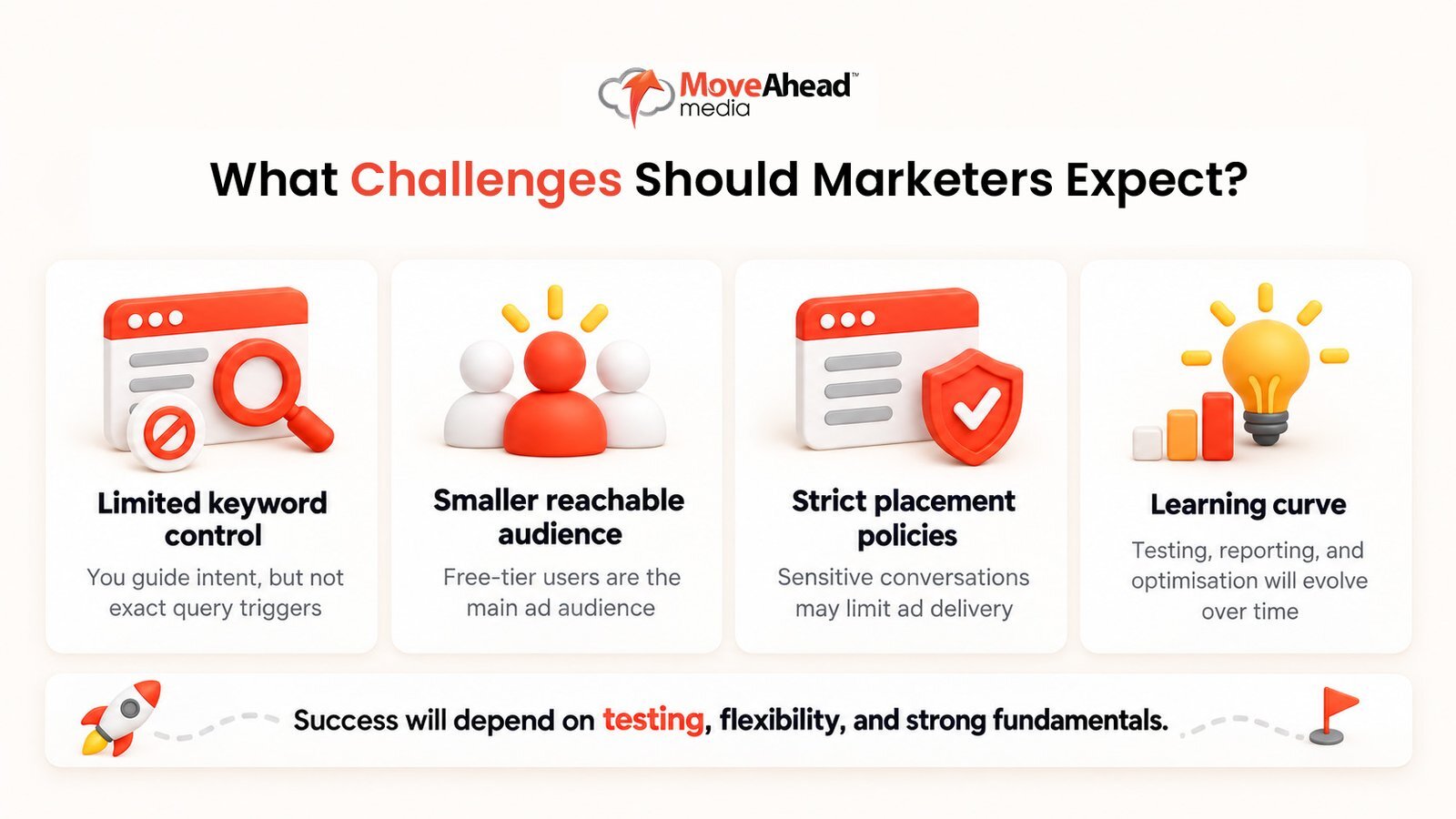
What Challenges Should Marketers Expect?
AI search advertising is a world of fascination and potential, but it comes with a learning curve. As marketers experiment with the platform, they may face these challenges:
- Limited Keyword Control: You can set context hints, but you lose control over the exact search terms that trigger your ad.
- Reaching a Capped Audience: These ads only reach users on free-tier plans, so professionals or corporate teams on paid plans are out of reach.
- Strict Placement Policies: In an effort to protect user trust, OpenAI restricts ads from appearing next to sensitive or high-stakes conversations.
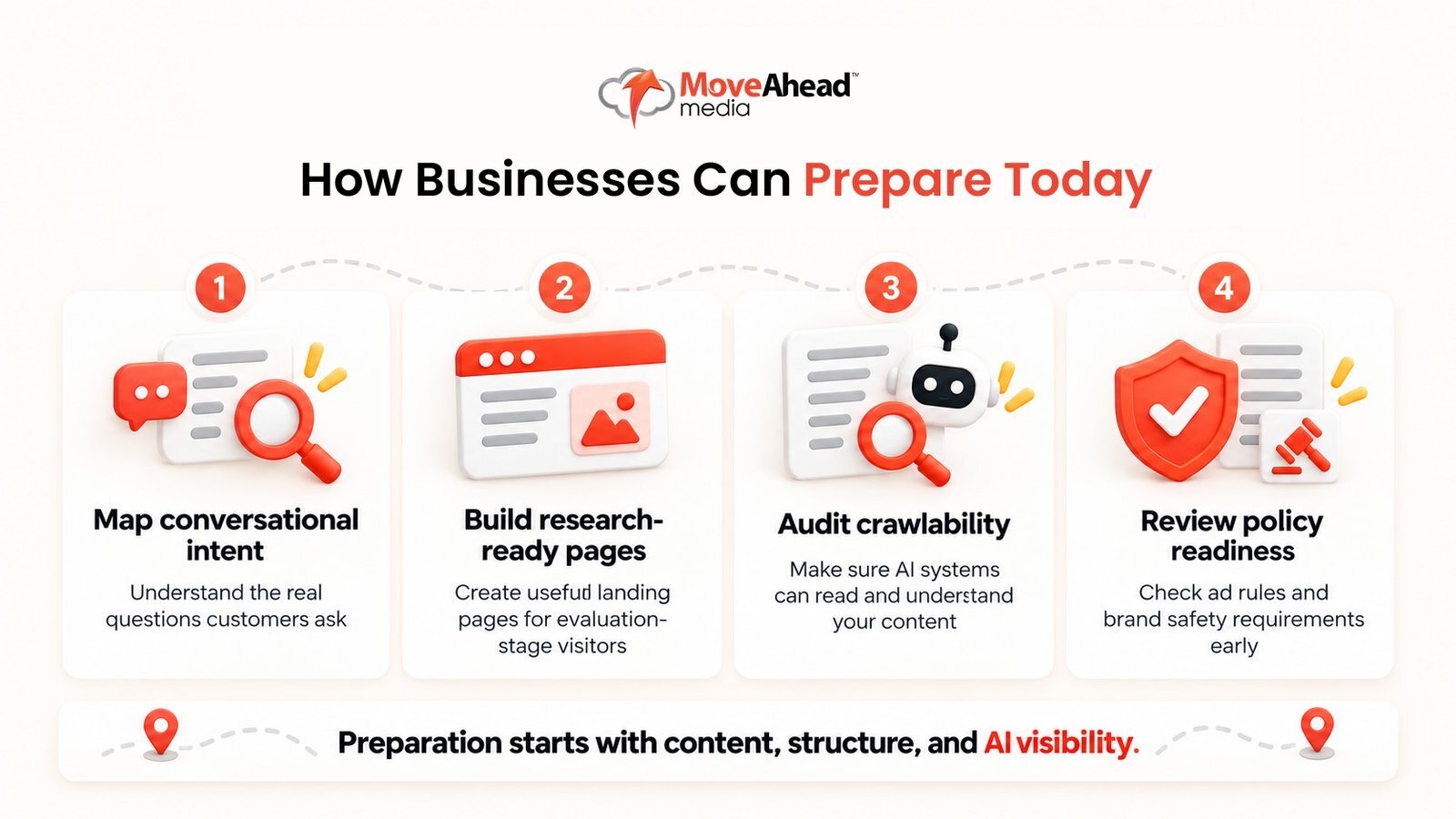
How Businesses Can Prepare Today
With a new ad medium, you might think that preparing for it means setting aside budget, but that’s not where we’d start. There’s a long list of things you can refine before you even get to that point. The earlier you tighten those foundations, the better:
- Map Out Conversational Intent: Do your research. What questions are your customers asking? What scenarios do they find themselves in? Your context hint needs to mirror those prompts rather than isolated keywords.
- Build Research-Ready Landing Pages: Users that land on your website from an AI response are in evaluation mode. They aren’t looking for a sales pitch, but to deepen the information they have already gathered. Integrating intent-driven content marketing allows your site to deliver the clear, non-salesy answers these visitors expect.
- Audit Technical Crawlability & Policy Compliance: Make sure AI web crawlers can read and parse your core content cleanly so your product specs are indexed accurately. On top of that, make sure you’ve reviewed OpenAI’s ad policies early on to avoid any stumbling blocks. Modern AI SEO Services can help optimise your site’s technical structure, so that both LLM crawlers and traditional search engines can index your brand.
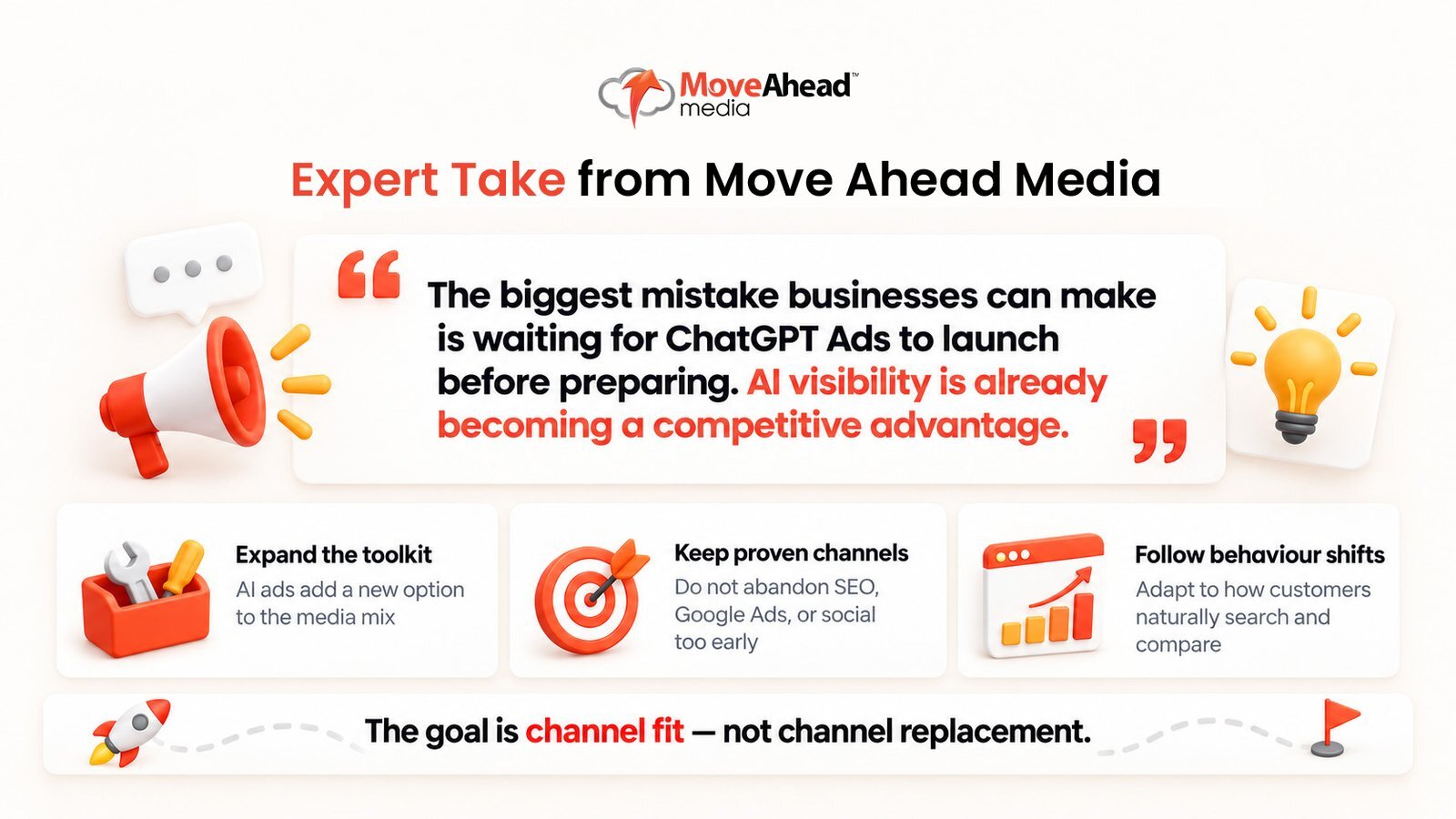
Expert Take from Move Ahead Media
When we asked Mikey, our Senior PPC Campaign Manager, about the buzz around conversational search, he noted that ChatGPT ads aren’t meant to replace traditional search engines.
He explains: “It’s less about one channel taking over another and more about expanding our digital toolkit based on which platforms users naturally engage with most.”
As long as businesses can evolve with these changing habits, there’s no reason to pull out of other advertising channels.
There’s a difference between reaching your target audience and reaching customers who are already looking for you and ready to act. ChatGPT advertising does the latter.
If you’re looking for an SEO agency in Thailand that understands how to leverage AI to capture high-intent searchers, we’re here to help. Check out our Case Studies to see how we build tailored strategies for our clients.